
Rare Summer Northern Lights Forecast to Illuminate Skies Across Parts of the Northern United States
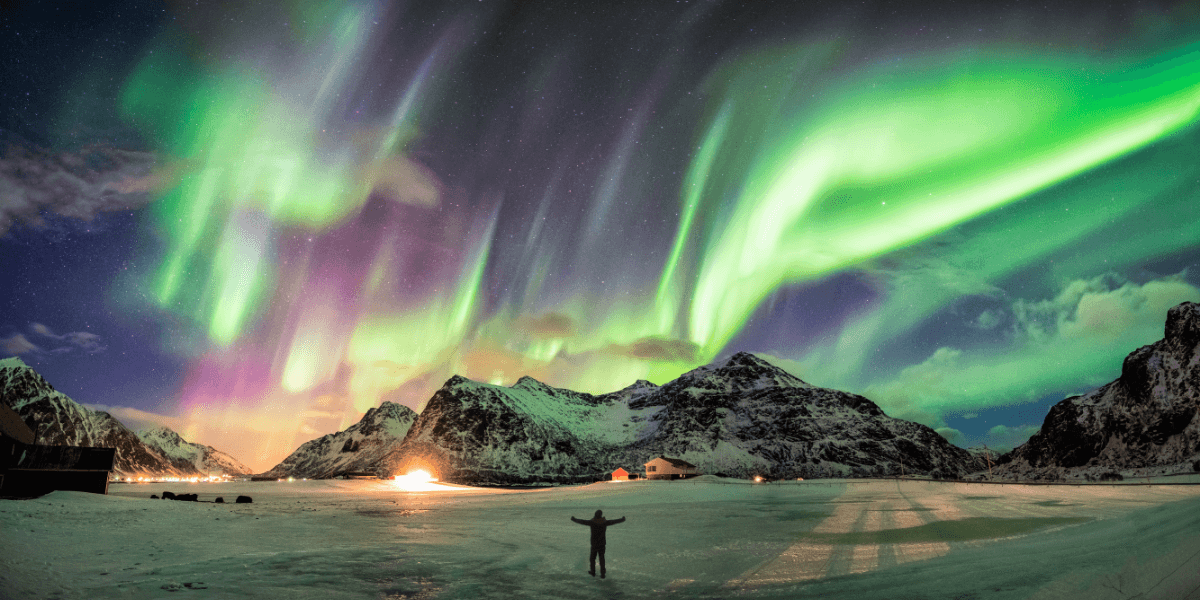
Skywatchers across portions of the northern United States received exciting news on July 21, 2026, as the National Oceanic and Atmospheric Administration (NOAA) forecasted conditions favorable for a rare summer appearance of the northern lights. The anticipated display is linked to a minor G1 geomagnetic storm expected to develop overnight into July 22, offering residents in several northern states an uncommon opportunity to witness one of nature’s most spectacular phenomena.
While the aurora borealis is most commonly associated with winter months and higher latitudes, favorable space weather conditions occasionally allow the colorful lights to become visible much farther south during the summer. NOAA’s Space Weather Prediction Center indicated that a stream of fast-moving solar wind originating from a large coronal hole on the Sun is expected to interact with Earth’s magnetic field, creating the conditions necessary for the display.
Unlike stronger geomagnetic storms triggered by powerful coronal mass ejections, this event is expected to remain at the G1, or “Minor,” level. Although considered the lowest category on NOAA’s geomagnetic storm scale, G1 storms are still capable of producing visible auroras across northern regions when skies remain clear and local light pollution is minimal. NOAA’s three-day space weather forecast projected geomagnetic activity reaching G1 levels beginning on July 22 as the solar wind stream arrives at Earth.
According to the forecast, the best viewing opportunities are expected in states near the Canadian border, including Washington, Idaho, Montana, North Dakota, Minnesota, Wisconsin, Michigan, Maine, Vermont, and New Hampshire. Depending on how Earth’s magnetic field responds to the incoming solar wind, some observers located slightly farther south may also catch faint glimpses of the aurora near the northern horizon.
Experts note that auroras occur when electrically charged particles released by the Sun travel toward Earth and interact with gases in the upper atmosphere. Guided by Earth’s magnetic field, these particles collide primarily with oxygen and nitrogen molecules, producing glowing curtains of green, red, purple, and occasionally pink light. The exact colors depend on the type of atmospheric gas involved and the altitude at which the collisions occur.
Although the forecast generated excitement among astronomy enthusiasts, visibility is never guaranteed. Several factors influence whether the aurora becomes visible from the ground, including cloud cover, local weather conditions, and the orientation of Earth’s magnetic field during the event. Even during favorable forecasts, the lights may appear faint to the naked eye before becoming brighter during periods of stronger geomagnetic activity.
Astronomers recommend traveling to dark locations away from city lights to maximize viewing opportunities. Rural areas with unobstructed northern horizons typically provide the best conditions. Observers are also encouraged to allow their eyes time to adjust to darkness and remain patient, as auroral activity often fluctuates throughout the night.
Modern smartphone cameras have also made aurora viewing more accessible. Many recent devices equipped with night mode or long-exposure photography settings can capture subtle colors that may be difficult to distinguish with the naked eye. Using a tripod or stable surface helps improve image quality during longer exposure times.
The July 21 forecast reflects the Sun’s continued period of heightened activity. Solar activity naturally follows an approximately 11-year cycle, during which the number of sunspots, solar flares, and other forms of activity increases before gradually declining. During these more active periods, Earth experiences more frequent opportunities for aurora displays as additional streams of charged particles interact with the planet’s magnetic field.
While G1 geomagnetic storms generally produce few noticeable impacts beyond auroral displays, NOAA continues to monitor space weather because stronger solar events can occasionally affect satellite communications, GPS accuracy, radio transmissions, and electrical infrastructure. Forecasting these events allows satellite operators, utility providers, airlines, and other industries to prepare if conditions become more intense.
For many Americans, however, the July 21 forecast is primarily an opportunity to experience an unusual natural event. Summer auroras are considerably less common than their winter counterparts due to shorter nights and increased twilight, making this forecast especially noteworthy for photographers, amateur astronomers, and families hoping to observe the phenomenon together.
The event also highlights the growing importance of space weather forecasting. NOAA’s Space Weather Prediction Center continuously monitors activity on the Sun using satellites and ground-based observations, providing advance notice of solar events that may affect Earth. These forecasts not only support scientific research but also help protect modern technologies that rely on satellites and communication systems.
As night falls across the northern United States, many residents will be watching the skies with anticipation. Whether the aurora appears as faint green arcs or vibrant waves of color stretching across the horizon, the forecast serves as a reminder of the dynamic relationship between the Sun and Earth. Even a relatively minor geomagnetic storm can produce an unforgettable display, offering people a rare chance to witness one of nature’s most remarkable light shows during the height of summer.

Democrat Digest Contributor
This article features partner, contributor, or branded content from a third party. Members of the Democrat Digest editorial staff were not involved in the creation of this content. All views and opinions are those of the contributor alone.
You May Also Like

Gulf Coast Faces Growing Storm Threat As Forecasters Track Potential Hurricane Development

“Could I Make Laws One Day?”: Amanda Matchett and the Power of Seeing Yourself in Leadership

Indigenous Peoples Day Celebrations Across America Highlight Native Culture, History, And Community

U.S. Announces More Than $6 Billion In Science Initiatives To Expand Research And Education
NASA Astronaut Christina Koch Brings Artemis Moon Mission Into The National Spotlight At Philadelphia NFL Game