
U.S. Science, Technology, and Space Update

The U.S. science and space sector was defined by steady, large-scale progress across exploration programs, commercial aerospace development, Earth observation systems, and advanced computing. Rather than a single headline event, the period reflects a broader trend of sustained innovation across multiple interconnected fields.
Continued Progress in Lunar Exploration
A central focus of U.S. space policy remains NASA’s Artemis program, which is working toward returning astronauts to the Moon and building a long-term lunar presence. In 2026, the program is in an advanced preparation and systems integration phase, with engineers refining mission hardware and operational procedures ahead of upcoming crewed flights.
Key work includes final validation of spacecraft systems designed for deep-space travel, such as environmental control, navigation redundancy, and crew safety mechanisms. These systems are essential for ensuring astronauts can safely travel beyond low-Earth orbit for extended durations.
Another major component of the effort involves coordination between NASA, international space agencies, and commercial partners. This collaboration is intended to support future lunar surface operations, including landing systems, surface mobility concepts, and infrastructure needed for sustained exploration. The long-term vision is to use the Moon as a testing ground for technologies that will eventually support human missions to Mars.
Expansion of Commercial Spaceflight
The U.S. commercial space industry continues to grow rapidly, reshaping how spacecraft are built, launched, and operated. Private companies now play a central role in cargo delivery, satellite deployment, and launch services for both government and commercial clients.
A key focus area is reusable rocket development, which is intended to reduce launch costs and increase mission frequency. Companies are refining booster recovery techniques, improving engine performance, and increasing payload capacity to support more complex missions.
Space-based logistics is also expanding. Commercial providers are increasingly involved in transporting supplies to orbital platforms and supporting satellite constellations that provide communication and Earth imaging services. These developments are gradually shifting space operations toward a more commercially driven ecosystem, where government agencies act more as partners and customers rather than sole operators.
This shift is particularly important for future deep-space missions, where NASA is expected to rely on commercial systems for critical components such as lunar landers and cargo transport.
Earth Science and Climate Monitoring
Earth observation remains one of the most important areas of U.S. space science. Satellite networks continuously collect data on atmospheric conditions, ocean behavior, land use, and weather systems.
These observations support climate research by helping scientists track long-term trends such as rising global temperatures, shifting precipitation patterns, and changes in polar ice coverage. They also play a practical role in disaster response, providing early warnings for hurricanes, floods, wildfires, and severe storms.
In addition to climate monitoring, Earth science satellites contribute to agricultural planning, water resource management, and urban development strategies. The increasing resolution and frequency of satellite data have made it possible to observe environmental changes in near real time, improving decision-making at both national and local levels.
Space-Based Astronomy and Deep Space Research
Astronomical research continues to advance through powerful space telescopes and observatories that operate beyond Earth’s atmosphere. These instruments allow scientists to observe distant galaxies, stellar formations, and planetary systems with unprecedented clarity.
Infrared space telescopes in particular are helping researchers study the early universe, capturing light from galaxies that formed billions of years ago. This data is essential for understanding how cosmic structures evolved over time.
Exoplanet research is another rapidly developing area. Scientists are analyzing the atmospheres of distant planets to identify chemical signatures that could indicate habitability or geological activity. These discoveries are reshaping how researchers think about planetary systems and the potential for life beyond Earth.
Artificial Intelligence in Science and Space Systems
Artificial intelligence has become a critical tool across U.S. science and aerospace programs. AI systems are used to process vast datasets generated by satellites, telescopes, and planetary missions.
In Earth science, machine learning models help identify patterns in climate data and improve weather forecasting accuracy. In space exploration, AI assists with spacecraft navigation, anomaly detection, and autonomous decision-making, reducing the need for constant ground control input.
AI is also increasingly used in scientific research workflows, helping researchers analyze complex datasets more efficiently and identify trends that would be difficult to detect manually. This integration is accelerating the pace of discovery across multiple scientific disciplines.
Low-Earth Orbit Infrastructure and Connectivity
Another major development area is the expansion of satellite networks in low-Earth orbit. These systems are providing improved global communications coverage, including high-speed internet access in remote regions.
They also support Earth imaging, navigation services, and scientific data collection. As the number of satellites increases, managing orbital traffic and minimizing space debris have become important engineering and policy challenges.
Efforts are underway to improve tracking systems and develop guidelines for sustainable orbital operations to ensure long-term usability of near-Earth space.

Democrat Digest Contributor
This article features partner, contributor, or branded content from a third party. Members of the Democrat Digest editorial staff were not involved in the creation of this content. All views and opinions are those of the contributor alone.
You May Also Like
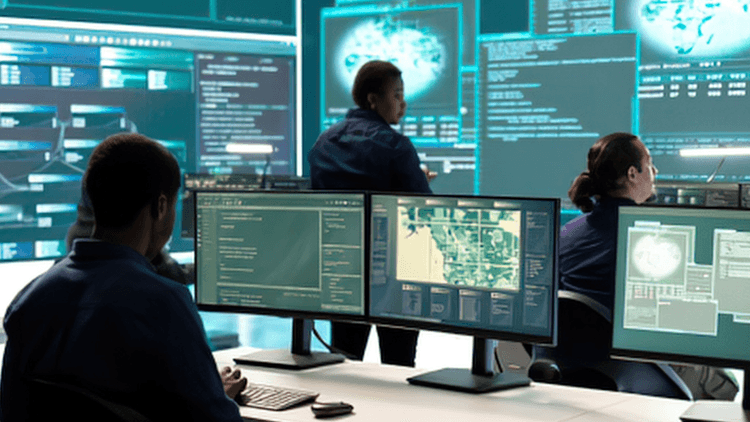
Gulf Coast Faces Growing Storm Threat As Forecasters Track Potential Hurricane Development

“Could I Make Laws One Day?”: Amanda Matchett and the Power of Seeing Yourself in Leadership

Indigenous Peoples Day Celebrations Across America Highlight Native Culture, History, And Community

U.S. Announces More Than $6 Billion In Science Initiatives To Expand Research And Education
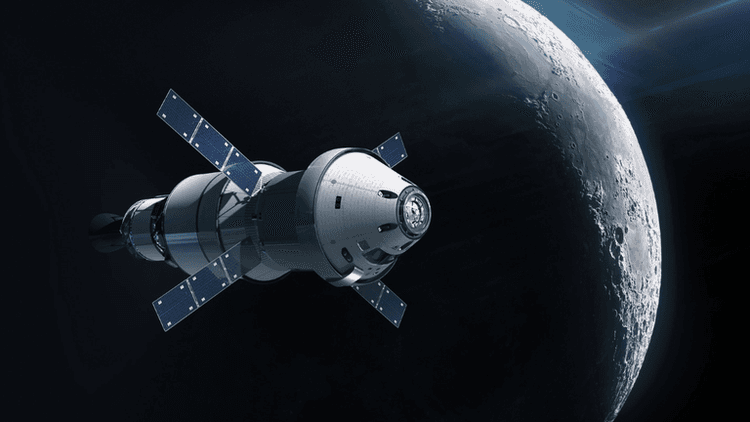
NASA Astronaut Christina Koch Brings Artemis Moon Mission Into The National Spotlight At Philadelphia NFL Game