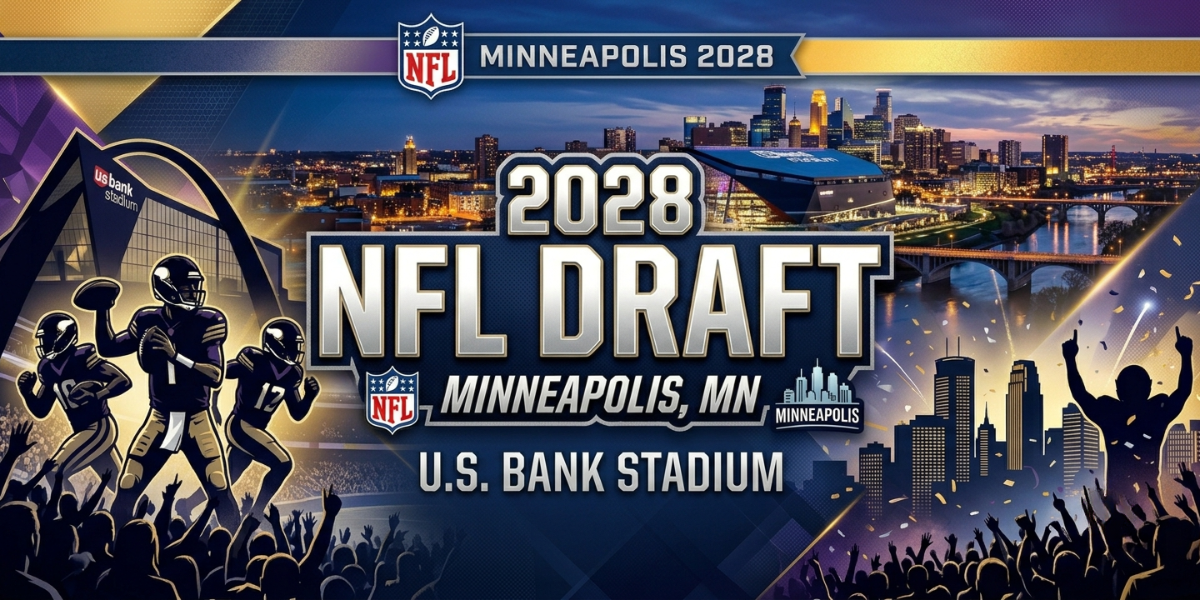
The National Football League has officially selected Minneapolis as the host city for the 2028 NFL Draft, marking the first time the annual event will take place in Minnesota. The announcement adds another major sporting milestone to the Twin Cities and continues the league’s strategy of rotating marquee events to cities that can combine modern venues with strong tourism and entertainment infrastructure.
The event is expected to be centered around U.S. Bank Stadium, home of the Minnesota Vikings. Since opening in 2016, the stadium has become one of the premier indoor sports venues in the country, previously hosting major events including Super Bowl LII and the NCAA Final Four. Its central downtown location and surrounding public spaces make it a strong candidate for the large-scale fan activities that now define the NFL Draft experience.
Over the past decade, the NFL Draft has transformed from a straightforward player selection process into one of the league’s largest fan events. Once held permanently in New York City, the draft moved to a rotating host model in 2015, allowing cities across the country to compete for the economic and tourism benefits that come with hosting. What was once a television-centered event now attracts hundreds of thousands of visitors over several days, combining football announcements with concerts, sponsor exhibits, youth clinics, and citywide celebrations.
Minneapolis is expected to use the draft as both a sports showcase and an economic opportunity. Similar host cities have reported strong gains in hotel occupancy, restaurant traffic, and local retail spending. The event brings in fans from across the country, many of whom spend several days attending fan zones, visiting local attractions, and participating in surrounding festivities. For Minnesota’s tourism sector, the draft offers a high-profile chance to attract national attention and encourage return visits.
The city’s selection reflects years of investment in infrastructure. Since the opening of U.S. Bank Stadium, local leaders have prioritized improvements to transportation, downtown accessibility, and event-hosting capacity. Minneapolis has expanded its public transit options, upgraded public gathering areas, and increased hospitality services to accommodate larger events. These efforts have strengthened the city’s reputation as a destination capable of handling national-scale sports programming.
NFL officials pointed to Minneapolis’s past performance hosting major events as a significant factor in the decision. The successful operation of the 2018 Super Bowl demonstrated the city’s ability to manage large crowds, coordinate transportation, and deliver the broad entertainment programming expected by league organizers. The league increasingly looks for host cities that can create a festival atmosphere around its events rather than simply provide a stadium.
This trend reflects a broader shift in American sports. Major leagues are using events such as the draft, all-star games, and championship contests to create economic partnerships with cities. These events serve not only as sports milestones but as tools for urban promotion. Host cities often use them to highlight redevelopment projects, attract tourism investment, and position themselves for future large-scale events.
The 2028 draft is expected to bring national media coverage to Minneapolis, with television broadcasts showcasing the city’s skyline, public spaces, and local attractions. Organizers will likely feature landmarks such as the Mississippi riverfront, Nicollet Mall, and regional cultural venues as part of the event presentation. The draft has become as much a tourism promotion campaign as a sports broadcast, giving host cities a chance to present themselves to millions of viewers.
For local businesses, the announcement is expected to create long-term planning opportunities. Hotels, restaurants, transportation companies, and event service providers typically begin preparing years in advance for NFL events. Temporary staffing, event partnerships, and marketing campaigns often accompany these preparations, giving businesses a chance to benefit from increased visitor traffic. In many cities, smaller local businesses see substantial gains from the crowds drawn to official and unofficial events.
The draft also offers community engagement opportunities. Recent host cities have included free fan festivals, local school partnerships, and public programs aimed at introducing younger audiences to the sport. These activities expand the event’s reach beyond football fans and create a citywide experience that draws families and tourists.
For Minneapolis, the selection confirms its place in the growing list of U.S. cities competing for major sports events. The city has invested heavily in making itself attractive to national leagues, and hosting the draft reinforces that strategy. It also signals confidence in Minnesota’s ability to continue serving as a central location for large public events.
As preparations begin, city leaders and league officials will work on transportation plans, security coordination, and public programming. While the first player selection is still years away, the announcement sets in motion one of the largest event planning efforts Minnesota will undertake in the coming decade.
The NFL Draft’s arrival in Minneapolis is more than a sports announcement. It reflects how major sporting events now shape economic development, civic identity, and tourism strategy. For Minnesota, hosting the 2028 draft will be both a celebration of football and a major opportunity to showcase the region on a national stage.