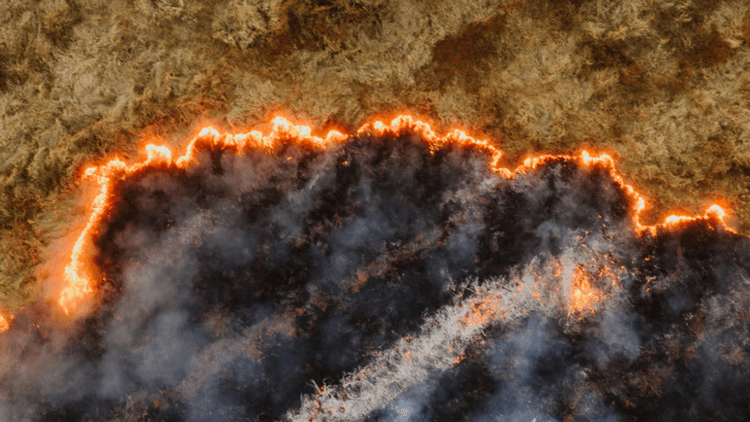
NASA’s Fire Amoeba Discovery Is A Reminder That Science Still Has The Power To Surprise Us
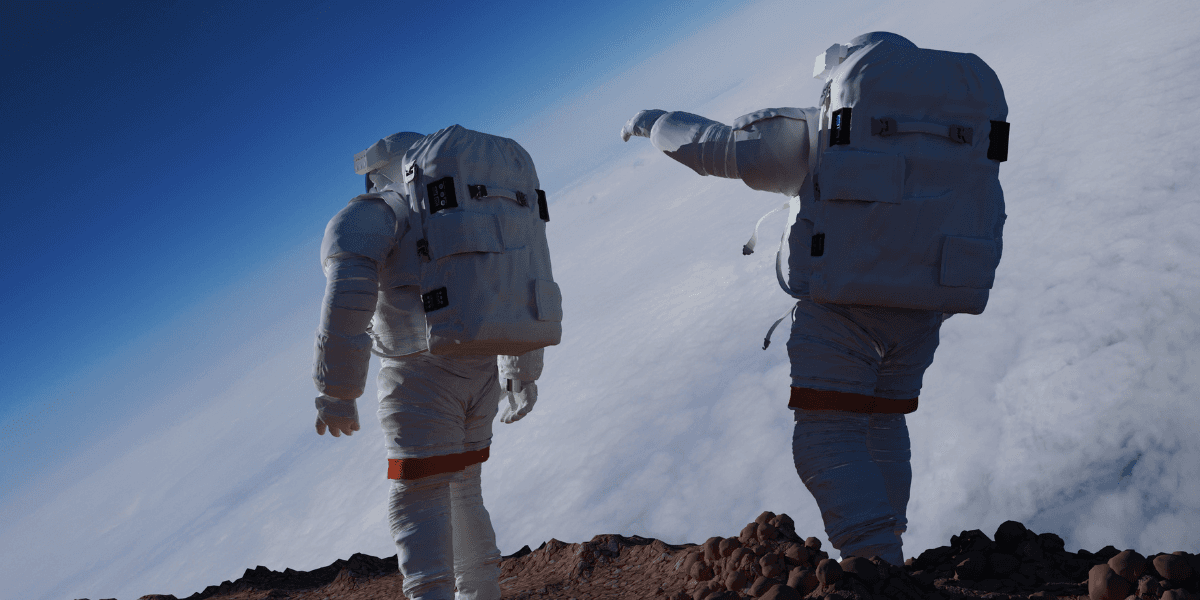
NASA backed research on a heat loving amoeba shows why exploring the limits of life remains essential to scientific discovery.
There are moments in science when something tiny forces us to reconsider something enormous. On September 22, 2026, NASA highlighted research involving an amoeba found in the heated waters of California’s Lassen Volcanic National Park. The organism can reproduce at temperatures once considered beyond the limits for complex cells. The discovery is remarkable on its own. More importantly, it offers a reminder that some of the most valuable scientific advances begin when researchers test assumptions that appear settled.
The organism is Incendiamoeba cascadensis, a microscopic amoeba whose name roughly reflects its fiery habitat in the Cascade region. Researchers observed it reproducing through cell division at 145 degrees Fahrenheit, or 63 degrees Celsius. According to NASA, that sets a record for the highest known temperature at which a eukaryote can reproduce. Eukaryotes are organisms whose cells contain a nucleus and other specialized structures. They include everything from single celled organisms to plants, animals, and humans.
The Fire Amoeba Shows Why Scientific Assumptions Need Testing
For years, scientists had good reasons to believe that complex cells faced a strict temperature barrier. Extreme heat can damage proteins, membranes, genetic material, and other components that cells need to function. Previous research had placed the known upper reproductive temperature for eukaryotic organisms at about 140 degrees Fahrenheit.
Then scientists looked more closely at an extreme environment and found something that exceeded that limit.
The fire amoeba does not simply endure high temperatures in a dormant state. NASA reported that it can reproduce at 145 degrees Fahrenheit and remains active at temperatures slightly above that point. Laboratory experiments also found that it could recover after brief exposure to even greater heat, although there are clear limits to what it can survive.
This is precisely why fundamental scientific research deserves attention. Science advances by establishing the best explanation supported by available evidence, then testing that explanation when new evidence becomes possible. A limit can look firm until researchers discover an exception.
The lesson should not be that science was somehow wrong to recognize earlier temperature limits. Those conclusions reflected the organisms and evidence scientists had studied at the time. The more meaningful lesson is that scientific knowledge is designed to become more precise as evidence grows.
A Tiny Organism Could Expand Much Bigger Questions
The significance of Incendiamoeba cascadensis extends beyond one unusual organism in California.
Researchers studying extremophiles examine organisms capable of living under conditions that would be hostile to most familiar forms of life. Those conditions can include extreme heat, cold, acidity, radiation, or pressure. Understanding how organisms survive in such environments helps scientists establish the biological boundaries of life on Earth.
That knowledge also matters to astrobiology, the scientific study of the origins, evolution, and potential distribution of life in the universe.
Earth remains the only world known to support life. Scientists therefore have to begin their search for possible life elsewhere with what they can observe here. Every organism that expands the known boundaries of survival can give researchers another piece of information about the environments worth investigating beyond Earth.
The new findings are especially interesting because eukaryotic cells are more structurally complex than bacteria and archaea, which have traditionally dominated research into life under extreme conditions. Researchers found that the fire amoeba has biological strategies that may help protect its DNA and proteins as temperatures rise.
That does not mean scientists have discovered evidence of complex life on another planet. They have not. Nor does the discovery prove that similar organisms exist beyond Earth. What it does is broaden the evidence researchers can use when considering where life might potentially survive.
Curiosity Remains One Of America’s Most Valuable Scientific Resources
There is another lesson here that reaches beyond astrobiology. Some discoveries cannot be predicted according to their immediate usefulness.
Studying an amoeba in hot water may sound distant from the everyday concerns of most Americans. Yet fundamental research has historically depended on scientists asking questions whose eventual importance was not always obvious at the beginning.
Research into extremophiles can improve understanding of genetics, cellular structures, proteins, ecosystems, and the conditions necessary for life. NASA also notes that proteins produced by extremophiles can have potential applications in biotechnology. Those possibilities require further study and should not be mistaken for guaranteed practical outcomes.
That distinction matters. Good science does not need exaggerated promises to justify curiosity.
The discovery at Lassen Volcanic National Park is compelling precisely because researchers found something that challenged an existing boundary. Their work demonstrates why observing unusual environments and investigating unexpected results remain essential parts of scientific progress.
The Best Scientific Discoveries Often Create Better Questions
The fire amoeba does not answer the biggest question in astrobiology: Are we alone?
Instead, it makes that question more interesting.
If complex cells can function under conditions once considered too hot, scientists may need to think more broadly about the environments in which certain forms of life could persist. At the same time, temperature is only one requirement. Acidity, pressure, oxygen, water, nutrients, and interactions with other organisms can all influence whether life survives.
That nuance may be the most valuable takeaway from the September 22 discovery.
Scientific progress rarely arrives as a final answer. More often, it changes the boundaries of the question. Incendiamoeba cascadensis has done exactly that. A microscopic organism living in California’s heated waters has given researchers another reason to keep examining the limits of life, both on Earth and beyond it.

Democrat Digest Contributor
This article features partner, contributor, or branded content from a third party. Members of the Democrat Digest editorial staff were not involved in the creation of this content. All views and opinions are those of the contributor alone.
You May Also Like

The Northeast Nor’easter Shows Why Weather Preparedness Must Become Part Of Everyday Life

America’s Flood Mapping Expansion Shows How Public Data Can Strengthen Community Resilience

Meta’s Facebook And Instagram Outage Disrupts Thousands Of Users Across The United States

Great Miami Hurricane Centennial Highlights A Century Of Progress In Storm Forecasting

Great Miami Hurricane Centennial Highlights A Century Of Progress In Storm Forecasting