
NASA’s Voyager 1 Reaches Historic One Light Day From Earth
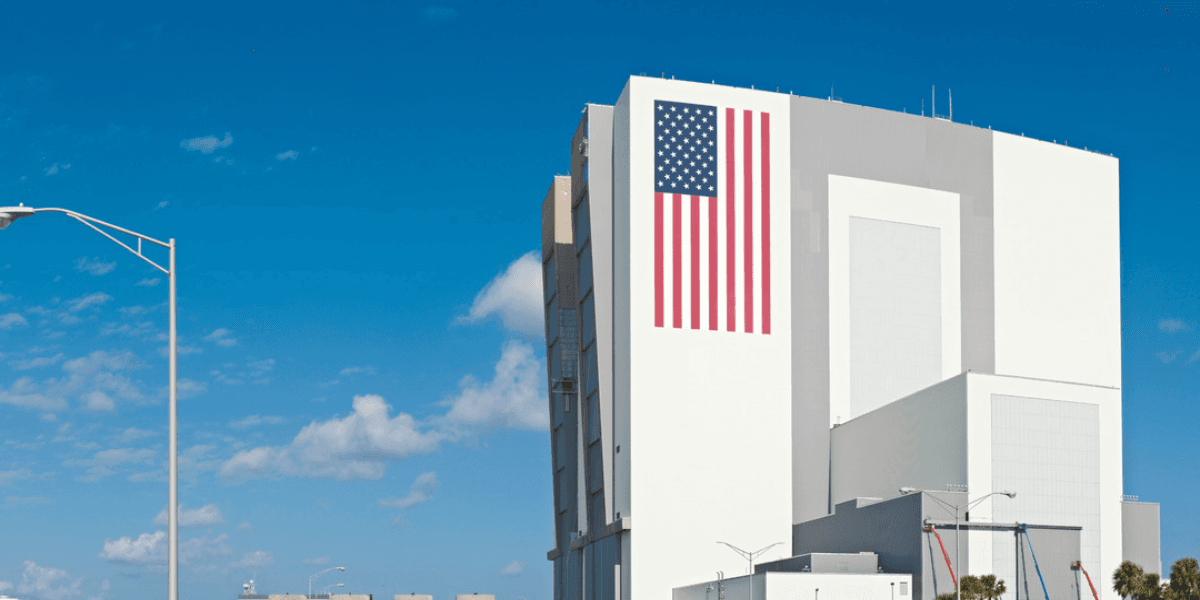
Voyager 1 reaches a historic distance from Earth, marking a remarkable achievement in space exploration and human engineering.
A Milestone Nearly 50 Years in the Making
On November 18, 2026, Voyager 1 reached a distance of approximately 16.1 billion miles (25.9 billion kilometers) from Earth. At that distance, a radio signal traveling at the speed of light requires 24 hours to reach the spacecraft. NASA officially recognized the achievement as the first time a human made object had traveled one light day from Earth.
The milestone occurred at approximately 2:16 a.m. Pacific Standard Time. It marked another extraordinary achievement for a spacecraft launched nearly five decades ago, when computer technology and space exploration were far less advanced than they are today.
Voyager 1 continues to demonstrate the possibilities of long term scientific exploration. Its journey has expanded humanity's understanding of the outer solar system and the largely unexplored space beyond the Sun's protective influence.
A Journey That Began in 1977
NASA launched Voyager 1 on September 5, 1977, from Cape Canaveral, Florida. Its original mission focused on studying Jupiter and Saturn, two of the largest planets in our solar system.
The spacecraft captured detailed images and collected scientific measurements that helped researchers understand these distant worlds.
During its journey, Voyager 1 provided important observations of Jupiter's atmosphere, volcanic activity on its moon Io, and the complex ring system surrounding Saturn.
One of its most significant achievements came in 1990, when the spacecraft captured the famous Pale Blue Dot image. The photograph showed Earth as a tiny point of light from billions of miles away.
The image offered a remarkable perspective on humanity's place in the universe and became one of the most recognizable photographs in the history of space exploration.
After completing its planetary observations, Voyager 1 continued traveling outward. In August 2012, it crossed the heliopause, the boundary where the Sun's solar wind gives way to the surrounding interstellar environment.
It became the first human made spacecraft to enter interstellar space.
What Does One Light Day Actually Mean?
A light day is a measurement of distance, not time.
Light travels approximately 186,000 miles per second. Over 24 hours, it covers approximately 16.1 billion miles.
Voyager 1 reaching this distance means that a message sent from Earth takes an entire day to reach the spacecraft. A response traveling back would require another day.
Consequently, communication with Voyager 1 now involves a delay of approximately 48 hours for a complete exchange of messages.
This presents a considerable challenge for NASA engineers. They cannot control the spacecraft in real time or respond immediately to unexpected problems.
Instead, mission controllers must carefully prepare commands, transmit instructions, and wait for confirmation.
The achievement also illustrates the enormous distance separating Earth from even the farthest human technology. Despite traveling at approximately 38,000 miles per hour, Voyager 1 has required almost 49 years to reach this milestone.
A Spacecraft Facing the Challenges of Age
While the achievement represents a historic success, Voyager 1 is also experiencing the effects of decades in space.
Its power supply gradually weakens as its onboard radioactive power source produces less electricity. NASA engineers have responded by shutting down selected instruments and reducing power consumption.
These decisions allow the remaining scientific equipment to continue operating for as long as possible.
However, the spacecraft recently experienced another technical challenge.
According to a November 18 update from NASA's Voyager mission team, engineers discovered on November 14 that Voyager 1 had stopped transmitting science and engineering data.
The Deep Space Network received a carrier signal from the spacecraft, indicating that it remained in contact with Earth. However, the expected scientific information was missing.
Engineers began investigating the problem and examining possible causes.
Despite the issue, NASA could still establish the spacecraft's distance using its known trajectory and speed. The agency planned to confirm the milestone after receiving the signal that had taken approximately one day to travel back to Earth.
NASA subsequently confirmed the achievement on November 19.
Why Voyager 1 Still Matters to Science
Voyager 1 continues to provide researchers with a unique opportunity to study interstellar space.
Before the Voyager missions, scientists had limited direct measurements of the environment beyond the heliosphere.
The spacecraft helped change that situation by collecting information about magnetic fields, charged particles, and other conditions beyond the Sun's protective boundary.
Its findings have contributed to scientific discussions about how the solar system interacts with the surrounding galaxy.
The mission has also demonstrated the value of designing spacecraft capable of operating far beyond their original expected lifetimes.
Engineers have repeatedly developed solutions to technical problems that would otherwise have ended the mission.
NASA estimates that power conservation measures could allow the Voyager spacecraft to maintain communication for several more years, although their remaining operational lifetimes are uncertain.
A Message From Earth to the Universe
Voyager 1 and its twin spacecraft, Voyager 2, carry another remarkable part of their mission: the Golden Record.
These gold plated records contain sounds, music, images, and greetings representing life and culture on Earth.
They were designed as a symbolic message for any intelligent civilization that might eventually encounter the spacecraft.
Although the likelihood of such an encounter remains unknown, the records reflect the scientific curiosity and imagination behind the Voyager program.
The spacecraft's journey has become a lasting representation of humanity's desire to explore beyond familiar boundaries.
A Legacy That Continues Beyond Earth
Voyager 1 reaching one light day from Earth is more than a distance record. It represents nearly five decades of scientific achievement, engineering innovation, and international interest in space exploration.
Its discoveries have helped researchers understand distant planets and investigate an environment that no spacecraft had previously explored.
Although the mission will eventually end as its power supply declines and its equipment becomes unable to operate, its scientific contributions will remain valuable.
The November 18 milestone demonstrates how a project launched in 1977 can continue producing meaningful discoveries for generations.
For scientists and space enthusiasts alike, Voyager 1 remains a reminder that exploration does not end when a spacecraft completes its original mission. Sometimes, the most remarkable discoveries begin when it continues traveling into the unknown.

Democrat Digest Contributor
This article features partner, contributor, or branded content from a third party. Members of the Democrat Digest editorial staff were not involved in the creation of this content. All views and opinions are those of the contributor alone.
You May Also Like

U.S. Banking Outage Raises Questions About Digital Reliability

FAA Ground Stop Exposes Urgent Need for Air Traffic Modernization

Oliver Happy Hour Examines the 2026 Blue Wave and What Comes Next

Virginia Reburies Three Enslaved Ancestors After Decades

NTSB Recovers Black Box From Deadly Florida Jet Crash